今天,当你走进几乎任何一家大型连锁超市时,你很可能会在不知不觉中看到它们——细长的数字屏幕横跨过道,安装在收银台上方,或者包裹在冷冻柜的边缘。这些是拉伸条形显示器,有时也称为超宽显示器或 拉伸LCD屏幕,它们已经悄然成为现代零售业中最实用的数字标牌格式之一。
与最初为电视内容设计的标准16:9显示器不同,拉伸条形显示器的宽高比从大约8:1到32:9不等。这种不同寻常的形状不是噱头,而是对零售空间实际建造方式的直接回应。货架是长而水平的。过道又长又平。收银台、冷冻柜和入口走廊都是长而水平的。如果不浪费空间或需要笨拙的安装支架,标准宽屏显示器根本不适合这种几何形状。
在与多个市场的零售装修团队和数字标牌集成商合作后,我亲眼目睹了哪些布局真正推动了结果,哪些布局最终尘埃落定。下面仔细看看拉伸条形显示器在超市环境中始终占据一席之地的五个应用程序。
1.高架通道标志和寻路
传统过道标志的问题
走过任何一家老超市,你可能会看到天花板上挂着印刷的丙烯酸标志----";乳制品,";";小吃,";";家庭,";等等。这些标志是有效的,但它们有三个基本局限性:
它们是静态的。一旦打印出来,如果不进行物理替换,它们就无法更新。
在多个地点更换它们很昂贵。一家拥有200家门店的连锁店需要200套新标志来进行任何品牌重塑或布局更改。
他们无法传达除类别名称之外的任何信息。没有促销,没有轮换信息,没有实时信息。
条形显示器如何解决这个问题
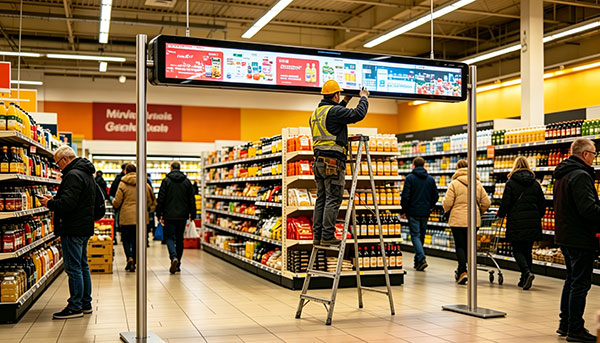
安装在相同的头顶位置,a 拉伸条显示可以在大多数时候显示类别名称,然后在促销内容、季节性信息中轮换,甚至在高峰时段进行交叉促销(";搭配我们的周末葡萄酒选择----7号通道")。
水平纵横比使其在视觉上起作用。当购物者沿着过道往下看时,他们的眼睛自然会沿着水平带从左向右看——这正是这些显示器所占据的形状。文本不需要太大才能在15-20米外保持清晰,这意味着可以在不牺牲可读性的情况下显示更多信息。
为什么这对多站点运营商很重要
对于跨多个地区或国家运营的连锁店来说,集中式内容管理可以说是这里更大的胜利。总部团队可以通过内容管理系统(CMS)在一夜之间将新的促销主题推送到每家商店,无需更改物理标志,无需商店级劳动力成本,也无需延迟发货。对于经常开展季节性活动(返校、假期、地区体育赛事)的运营商来说,这种灵活性本身往往就证明了投资的合理性。
2.货架边缘和缆车端促销
为什么缆车尽头是如此有价值的房地产
在零售业中,过道的尽头(通常称为缆车端或端盖)是整个商店中最有价值的物理空间之一。它从多个方向可见,它打断了购物者的路径,也是冲动购买和促销最集中的地方。
传统上,这个空间被印刷的标题卡、货架讲话者和价格标签所装饰——每次促销活动发生变化时,所有这些都需要手动更换。
伸缩杆显示器的安装位置
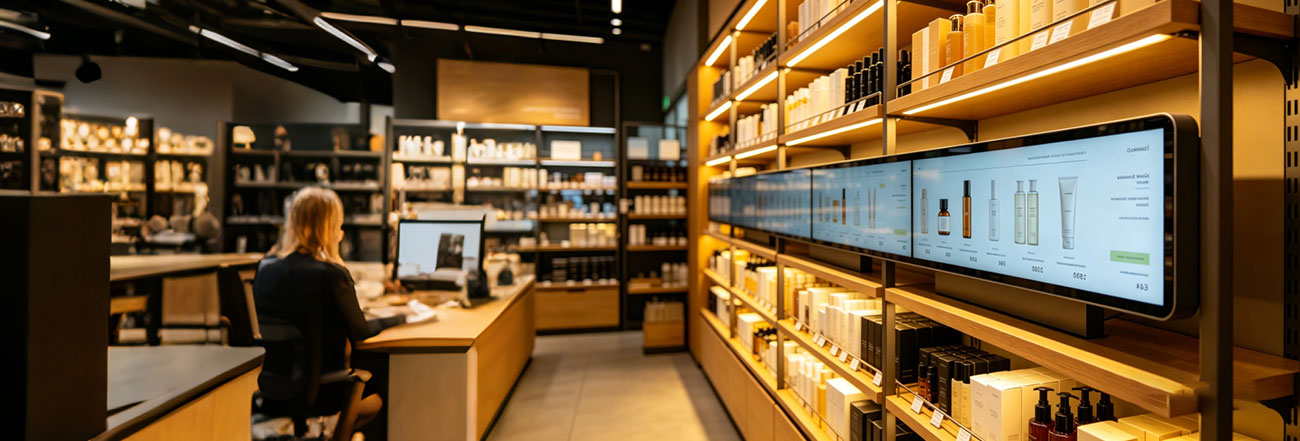
沿着缆车端部的顶部边缘或正面安装的拉伸条形显示器可以持续播放促销信息——定价;买一送一";报价、营养亮点或供应商赞助的广告——而不会占用任何可能容纳产品的货架深度。
因为屏幕跨越了整个单元的宽度,所以它创建了一个连续的视觉带,在整个促销区域吸引眼球,而不是只突出一个面向的产品。这对于类别队长计划尤其有价值,在该计划中,单个品牌或供应商为整个促销区域的标牌和内容提供资金,以换取突出的位置。
关于维护的实用说明
有一个细节在规划中很容易被忽视,但在实践中却非常重要:高流量区域的缆车端部显示器需要建造得具有耐用性。手推车不断撞到端盖,显示器外壳需要承受这种情况,而不会影响屏幕本身。参与过多次推出的集成商会告诉你,安装支架质量和抗冲击边框不是可选的额外功能——它们是显示器持续五年或五个月的区别。
3.检查车道和排队区信息
为什么结账是一个特别有价值的区域
在超市的所有区域中,收银台是购物者最静止、注意力最不集中的区域。无论是30秒还是5分钟,这个停留时间都代表了一个在商店其他地方根本不存在的被俘虏的观众。
拉伸条形显示器在这里做什么
这些显示器安装在收银台上方或旁边,通常用于:
最后一刻的冲动促销(糖果、礼品卡、季节性附加商品)
忠诚度计划提醒和应用程序下载提示
支付方式信息(非接触式、移动钱包接受)
商店公告——关门时间、节假日、安全通知
实际优势:无需进行结构性调整
由于这种格式在垂直方向上很窄,但在水平方向上很宽,因此它适合结账时有限的开销空间,而不需要对现有的柜台基础设施进行任何修改。这是几个大型杂货集团在其商店网络中标准化这种布局的一个主要原因——这是为数不多的可以在不涉及商店建筑或固定设备团队的情况下实施的数字标牌之一。
还有一个更安静的好处值得一提:结账区的显示屏让工作人员在安静的时候看一眼,而不是纯粹的交易屏幕,一些运营商发现这有助于提高一线人员的参与度——尽管这是一个不可否认的次要、更难衡量的好处。
4.冷藏和冷冻箱表头显示
数字标牌的真正困难环境
冷藏区——冷藏箱、冷冻通道、乳制品冷却器——对任何电子显示器都提出了一系列独特的挑战:
暴露在较温暖的储存空气中的冷表面容易形成冷凝
外壳附近的温度波动会随着时间的推移影响显示组件
玻璃门产生眩光和反射,使屏幕难以阅读
由于这些原因,直接放置在冷箱内或靠冷箱放置的显示器通常会缩短寿命和可读性问题。
The Header Unit Solution
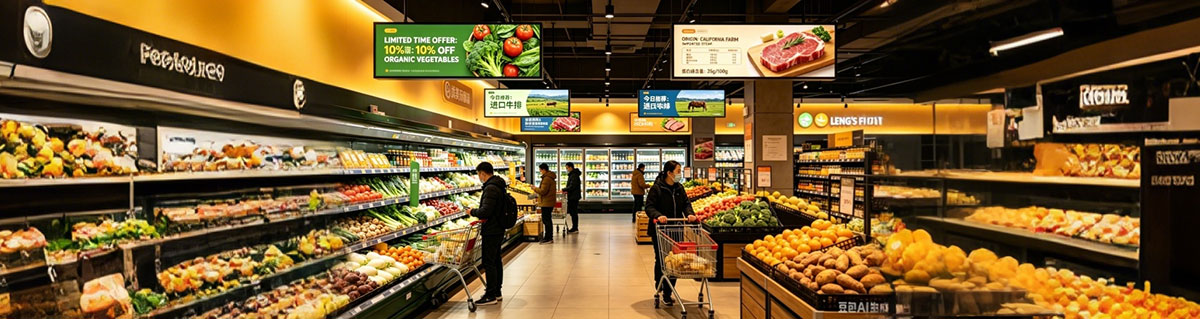
The more practical approach — and the one most experienced integrators recommend — is mounting the stretched bar display as a header unit above the case, outside the cold zone entirely. This keeps the display in ambient store temperature while still positioning it directly above the products it's promoting.
Why This Application Has Grown So Quickly
This use case has expanded significantly in categories with high price volatility — particularly fresh meat, seafood, and produce sold from refrigerated units. In these categories, prices can change daily or even multiple times per day depending on supply costs.
Centrally updated digital pricing on header units eliminates the labor-intensive process of manually printing and replacing paper price tags across dozens of cases. It also significantly improves price accuracy and compliance — an area that has come under increasing regulatory scrutiny in markets including the UK and EU, where pricing display requirements are becoming more strictly enforced.
For multi-site chains, the labor savings alone — multiplied across hundreds of stores and thousands of SKUs — often represents a substantial portion of the return on investment for the entire signage rollout.
5. Entrance and Welcome Zone Branding
First Impressions Set the Tone
The store entrance is the first thing a customer sees, and it shapes their expectations for the entire visit. It's also one of the few locations in the store that virtually every customer passes, regardless of which direction they head once inside.
Common Uses for Entrance Displays
Stretched bar displays positioned above entry doors or along welcome corridors are typically used for:
Store branding and seasonal campaign visuals
Operating hours and holiday schedule updates
Loyalty app and membership program promotion
Synchronized national advertising campaigns
The Synchronization Advantage
One of the more sophisticated applications here is real-time synchronization with national advertising campaigns. When a chain runs a major TV or digital ad campaign, the in-store entrance display can be updated to mirror that creative — same colors, same messaging, same visual language — creating a consistent brand experience from the moment a customer sees the ad to the moment they walk through the door.
Beyond Marketing: Operational and Safety Communication
It's also worth noting that entrance displays serve an important secondary function: they're often the fastest way to communicate store-wide announcements, including product recalls, weather-related closures, or safety notices. Because every customer passes through this zone, it's one of the few placements where a message is guaranteed to reach virtually 100% of visitors — something that's increasingly valued by operations teams, not just marketing departments.
Final Thoughts: Getting Implementation Right
Across all five of these applications, one pattern holds true: the displays that succeed are the ones treated as part of the store's architecture, not as an add-on bolted onto an existing layout.
A few practical considerations that experienced operators consistently flag during planning:
Mounting and durability — High-traffic zones (gondola ends, checkout lanes) need impact-resistant housings and secure mounting hardware that can withstand daily contact with trolleys and foot traffic.
Brightness and ambient lighting — Supermarkets have wildly different lighting conditions across zones — bright entrance areas, dimmer aisles, cold case lighting. Display brightness needs to be calibrated (or auto-adjusting) for each environment, or content becomes unreadable in certain zones.
Content management infrastructure — The hardware is only half the equation. A CMS that supports remote, multi-site content updates, scheduling, and emergency overrides (for recalls or safety notices) is what turns a display from a static screen into a genuinely useful operational tool.
Pilot before scaling — Before committing to a chain-wide rollout, it's worth requesting demonstration units installed in an actual store environment for a minimum two-week period. Real-world lighting, foot traffic, and content refresh cycles reveal performance issues that simply don't show up in a showroom demo — and catching them early is far cheaper than retrofitting after a full deployment.
If you're evaluating stretched bar displays for a supermarket rollout, the underlying technology has matured significantly — but success still comes down to matching the right format, mounting solution, and content strategy to each specific zone. The applications above represent where the format has proven itself repeatedly across real-world deployments, and they're a solid starting point for any planning discussion.