条形显示器与标准显示器:哪种适合您的业务?
更新于20260521年5月阅读9分钟显示技术指南
并非所有的显示决策都是平等的。如果您要为零售店、交通系统或工业环境配备设备,在拉伸条形显示器和标准显示器之间进行选择会直接影响客户参与度、安装成本和长期投资回报率。这是你需要知道的一切。
在本文中
→ 什么是拉伸条显示?
→ 正面交锋:关键规格差异
→ 每种显示器类型在哪里表现最佳
→ 投资回报率和总拥有成本
→ 最终判决:如何选择
→ FAQ
什么是拉伸条显示?
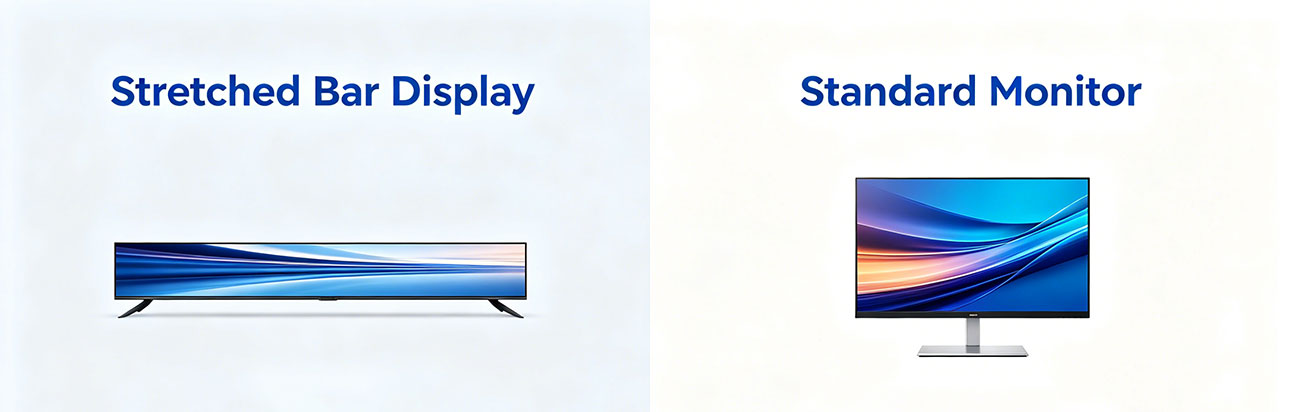
A. 拉伸条显示 --也称为条形LCD或超宽条形屏幕,是一种具有细长纵横比的专用显示器,通常在16:3至32:9甚至更宽的范围内。与标准显示器或电视常见的16:9比例不同,拉伸条形显示器专为狭窄的水平空间而设计,传统屏幕根本不适合这些空间。

关键的区别不仅仅是形状,还有目的。37英寸32:9拉伸条形显示器提供的水平视觉空间与并排放置的两个24英寸显示器大致相同,但在一个无缝面板中,没有边框间隙,安装也简单得多。这使得它们在任何连续、宽格式内容比高度更重要的地方都是无价的。
行业事实: 70%的消费者在高流量零售环境中忽略了标准显示器。伸展条格式以其独特的纵横比被证明可以打破这种模式,并在决策时吸引注意力。
正面交锋:关键规格差异
在做出任何购买决定之前,了解这两个显示器类别在技术上的差异是有帮助的。
标准监视器
宽高比16:9
典型分辨率1080p–4K超高清
亮度250 – 500 nits
Brightness (high-end)Up to 1000 nits
Operating temp10°C – 40°C typical
Typical lifespan30,000 – 50,000 hrs
Install orientationLandscape / portrait
Content typeGeneral purpose
Touch supportOptional
Stretched bar display
宽高比16:3 / 32:9 / custom
典型分辨率1920×360 to 3840×720
亮度500 – 1500 nits
Brightness (high-end)Up to 3000 nits
Operating temp-20°C – 70°C (industrial)
Typical lifespan50,000 – 70,000 hrs
Install orientationHorizontal (standard)
Content typeSignage, data, panoramic
Touch supportCapacitive or resistive
The brightness difference alone is significant. Industrial-grade stretched bar displays can reach 3,000 nits — roughly ten times a typical office monitor — making them legible in direct sunlight, high-ambient retail environments, or outdoor transit shelters where standard monitors would wash out completely.
Where each display type performs best
This is where the decision becomes practical. The right choice comes down to your specific deployment environment and what your audience needs to see.
Stretched bar displays excel in these environments
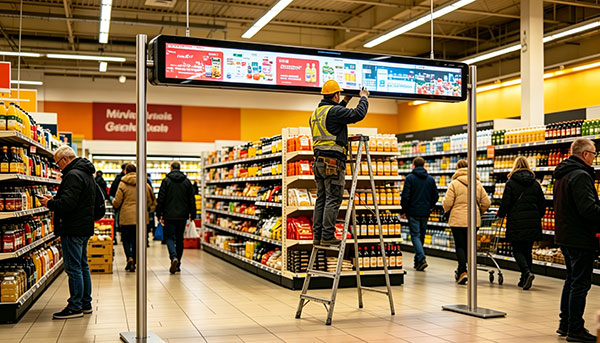
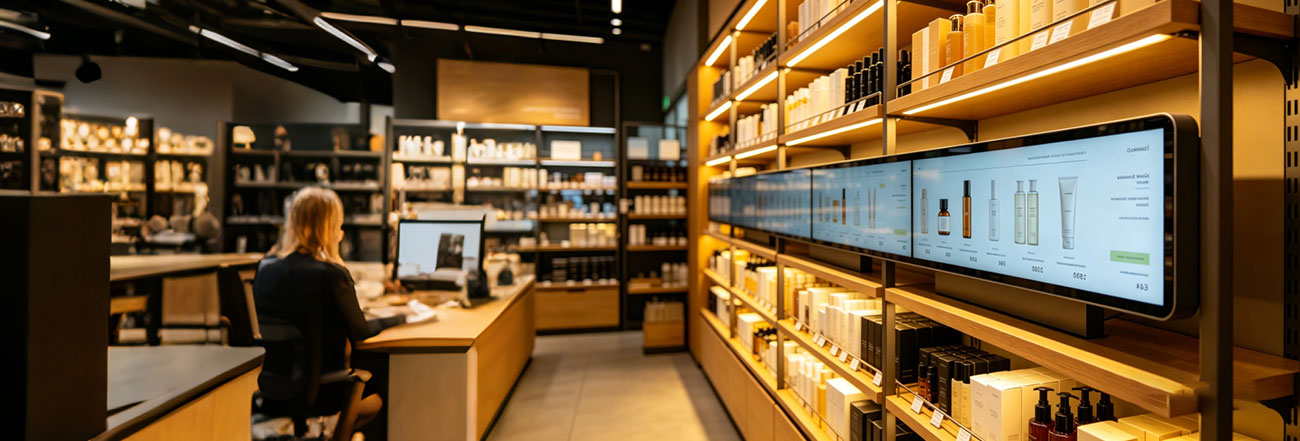
Retail shelf edge
Replace static price tags with dynamic content. One supermarket chain reported a 28% sales uplift and reduced pricing errors from 22% down to 2% after deployment.
Transit & transportation
Ideal for train carriages, subway platforms, and airport concourses. Curved consoles and narrow overhead channels fit bar displays perfectly.
Digital menu boards
Restaurants and QSR chains use stretched formats above service counters where height is limited but width is available. Real-time pricing and promotions.
Industrial control panels
Machine interfaces, HMI panels, and rack-mounted server dashboards benefit from the wide format to display multiple data streams simultaneously.
Automotive & vehicle
Instrument cluster displays, in-cabin infotainment, and fleet management panels. MIPI and LVDS interfaces fit seamlessly into curved dashboards.
Healthcare facilities
Corridor and ward information displays. Over 51% of U.S. hospitals now use stretched bar formats for digital noticeboards and patient-facing communications.
Standard monitors remain the better choice for
General office and productivity work. Writing, spreadsheets, video calls, and creative work all benefit from the 16:9 aspect ratio that software is universally designed around. Forcing general-purpose apps onto a bar display creates awkward UI scaling.
Video production and media consumption. Film, TV, and most streaming content is mastered in 16:9. A standard monitor renders this without letterboxing or cropping artifacts.
Single-user data analysis and design. Graphic designers, analysts, and developers typically work better with a tall 16:9 screen or a dual-monitor setup rather than a single wide bar.
Budget-constrained single-user setups. For a single workstation, standard monitors offer dramatically lower cost per square inch of usable screen space for general tasks.
ROI and total cost of ownership
The conversation around cost is more nuanced than unit price. Stretched bar displays carry a higher upfront cost than commodity monitors, but the total cost of ownership calculation often favors them in commercial deployments — for three specific reasons.
1. Longer rated lifespan. Commercial-grade stretched bar displays are typically rated for 50,000 to 70,000 hours of continuous operation, compared to 30,000–50,000 hours for consumer monitors. In a 24/7 retail or transit environment, this difference translates directly into fewer replacement cycles over a 5-year period.
2. Energy efficiency at scale. Modern stretched bar displays engineered for commercial deployment consume up to 30% less power per square inch than legacy multi-panel setups they replace. At scale — dozens or hundreds of units — this adds up to material electricity cost savings annually.
3. Measurable engagement impact. In retail deployments, stretched bar displays integrated with dynamic content management systems have demonstrated 25–30% improvements in customer engagement metrics. For businesses where display-driven conversions are measurable, the ROI case becomes straightforward.
The primary cost challenge is initial capital outlay and integration with existing CMS infrastructure. Approximately 44% of businesses cite cost concerns, and 41% report integration friction as the main deployment barrier. Working with a vendor who provides pre-integrated CMS compatibility and hardware support substantially reduces both.
Final verdict: how to choose
There's no single right answer — but there is a clear decision framework based on your deployment context.
Choose a stretched bar display if: you're deploying in a space-constrained environment, need continuous wide-format content (pricing, schedules, promotions), require outdoor-rated or high-brightness performance, or are replacing multi-panel signage rigs that create bezel gaps.
Choose a standard monitor if: your primary use is single-user productivity, video content consumption, software development, or any application where 16:9 software compatibility matters. Standard monitors also win on price-per-unit for non-commercial workstations.
Still unsure? The clearest signal is installation geometry. If your target space is wider than it is tall — a shelf edge, a transit ceiling, an overhead kiosk rail — a
拉伸条显示 is almost certainly the right tool. If you're replacing a desk monitor, it almost certainly isn't.
常见问题
Can stretched bar displays run standard video content?
Yes, but native video content designed for 16:9 will letterbox or require cropping when displayed on a bar format. For best results, content should be purpose-designed for the specific aspect ratio of your display. Most modern CMS platforms support bar-format templates natively.
What resolutions are available for stretched bar displays?
Common resolutions range from 1920×360 and 1920×540 for smaller units up to 3840×720 for 4K-class bar displays. The specific resolution depends heavily on the physical size and aspect ratio. When comparing models, pixel density (PPI) is a better benchmark than resolution alone.
Do stretched bar displays work outdoors?
High-brightness models rated at 1500–3000 nits are designed for outdoor or semi-outdoor use. You'll also want to confirm IP-rated enclosures for dust and moisture protection, and an extended operating temperature range (typically -20°C to 55°C or beyond) for unheated outdoor environments.
How are stretched bar displays connected and managed?
Most commercial units support HDMI, DisplayPort, and RS232 or LAN-based remote management. Many integrate with major digital signage CMS platforms (BrightSign, Chrome OS for signage, etc.) via network. Industrial variants may use MIPI or LVDS for embedded applications.
Are stretched bar displays suitable for 24/7 operation?
Commercial-grade stretched bar displays are specifically designed for continuous operation. Unlike consumer monitors that may not be rated for non-stop use, most professional bar displays carry 24/7 operating certifications and are backed by commercial warranties covering this usage pattern.
Need help selecting the right display?
Tell us about your installation environment and we'll recommend the best stretched bar display spec for your application.